
Hot weather in the dance studio: keeping dancers safe

It’s 5pm in July. The sun has been on the studio windows all afternoon, and your first class arrives pink faced from the school run. Twenty minutes into the warm up, the room feels like a greenhouse.
Dance is hot work at the best of times. On very warm days, a few simple changes keep everyone safe and still dancing. This Teach.Dance guide to dance studio hot weather brings together practical tips from UK Health Security Agency (UKHSA) and NHS advice. It’s general guidance, so talk to a health professional about any individual dancer.
Why young dancers feel the heat
Children don’t always notice they’re overheating until they feel unwell. They’re busy, excited and keen to keep going. That’s a big part of why they need us to keep an eye out.
UKHSA’s hot weather guidance for people working with children says children can be at risk because of their physiology, behaviours and activity levels. It says children under 5, and those with health conditions or taking certain medications, may be at greater risk.
If a dancer has a complex health condition, the guidance suggests getting advice from their clinical team. In practice, that usually means a quick chat with the parent about what helps.
Sign up for heat alerts
A warning the day before gives you time to adapt your plan. UKHSA and the Met Office run the Weather-Health Alerting System, and anyone can register for the email alerts. The core season for heat alerts runs from 1 June to 30 September.
The alerts cover England. If you teach in Scotland, Wales or Northern Ireland, check the advice for your nation too.
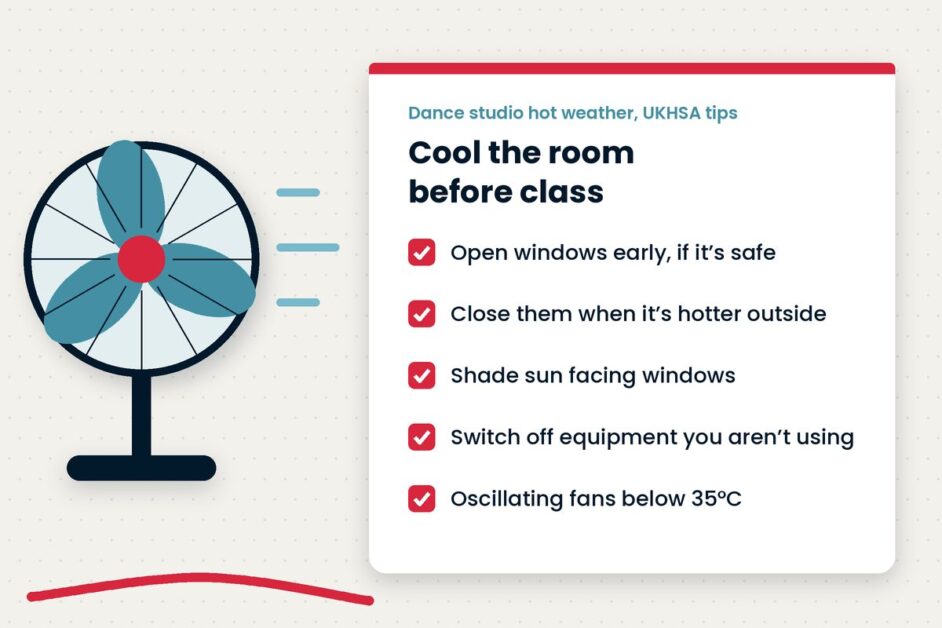
Cool the room before class
The coolest studio is the one you prepare early. The UKHSA guidance has practical steps for buildings that work well for dance spaces:
- open windows early in the morning, if it’s safe, to let stored heat escape
- close windows during the day when it’s hotter outside than in
- shade sun facing windows and close blinds or curtains
- switch off equipment you aren’t using, rather than leaving it on standby
- use oscillating fans if the temperature is below 35°C
The guidance notes that above 35°C, fans may be counterproductive. If you hire a hall, ask the venue what blinds, fans and ventilation you can use.
You might wonder if there’s a temperature limit for teaching. The Health and Safety Executive explains in its workplace temperature guidance that there’s no law for a maximum working temperature. Employers still need to keep temperatures at a comfortable level and provide clean, fresh air.
Adapt your lesson plan
Hot days are a good time for the quieter parts of dance. Think slow barre work, port de bras, musicality games or learning choreography by marking it. Save the jumps and fast travelling steps for a cooler week.
In its advice on protecting children outdoors, UKHSA says children shouldn’t do vigorous physical activity on very hot days. For buildings, it suggests considering timetable changes to avoid teaching in very hot conditions. For a studio, that could mean swapping a high energy class to a gentler plan or a cooler room.
Make water breaks part of the class
Build drinks into the lesson so nobody has to ask. A water break after the warm up, after the centre work and before the final dance is a good rhythm.
UKHSA advises encouraging children to drink more than usual in hot weather. Remind families to send a named, full water bottle, and keep a jug and cups for anyone who forgets.
Relax the uniform rules
Neat uniform matters, but comfort comes first in a heatwave. The same UKHSA advice says uniform rules should be relaxed, especially during amber or red heat alerts. It also recommends loose, light coloured clothing to help children stay cool.
Let dancers wear a light T shirt and shorts, or skip the cardigan and tights for the day. Tell families in advance, so nobody feels they’re breaking the rules.
Spot heat exhaustion early
Watch for the dancer who goes quiet, pale or wobbly. The NHS page on heat exhaustion and heatstroke lists symptoms including tiredness, dizziness, headache, feeling sick, cramps and being very thirsty. It says the symptoms are often the same in adults and children.
The NHS sets out 4 steps if someone has heat exhaustion. Move them somewhere cool, remove unnecessary clothing and give them plenty of water. Cool their skin with cool water and a fan, and stay with them.
They should start to feel better within 30 minutes. The NHS says to call 999 if they’re still unwell after 30 minutes, or show signs of heatstroke. Those signs include hot skin that isn’t sweating, confusion, a seizure or loss of consciousness.
Outdoor rehearsals and summer camps
Taking a rehearsal outside? Plan for the sun as well as the heat. The NHS advice on sunscreen and sun safety says to stay in the shade between 11am and 3pm. In the UK, that applies from March to October. It recommends sunscreen of at least SPF 30 with at least 4 star UVA protection.
Teachers need looking after too. Keep your own water bottle close and pace your demonstrations. Our Teach.Dance post on dance teacher self care has more ideas for looking after yourself through a busy term.
Before the next warm spell, register for the heat alerts and write a short hot weather plan. Pin it in the studio so every teacher and helper knows what to do.
Teach.Dance · For Teachers, By Teachers




Responses