
Trial classes at your dance school: welcoming new families


It’s the first Saturday of term. A small girl in brand new ballet shoes is hiding behind her dad’s legs at the studio door. How the next ten minutes go might decide whether she comes back.
September brings new faces to the studio. A warm, organised welcome helps children settle and reassures their families. We’ve gathered our favourite Teach.Dance tips for trial classes and that first week. Some of the safety points come from the Department for Education’s safeguarding guidance for out-of-school settings.
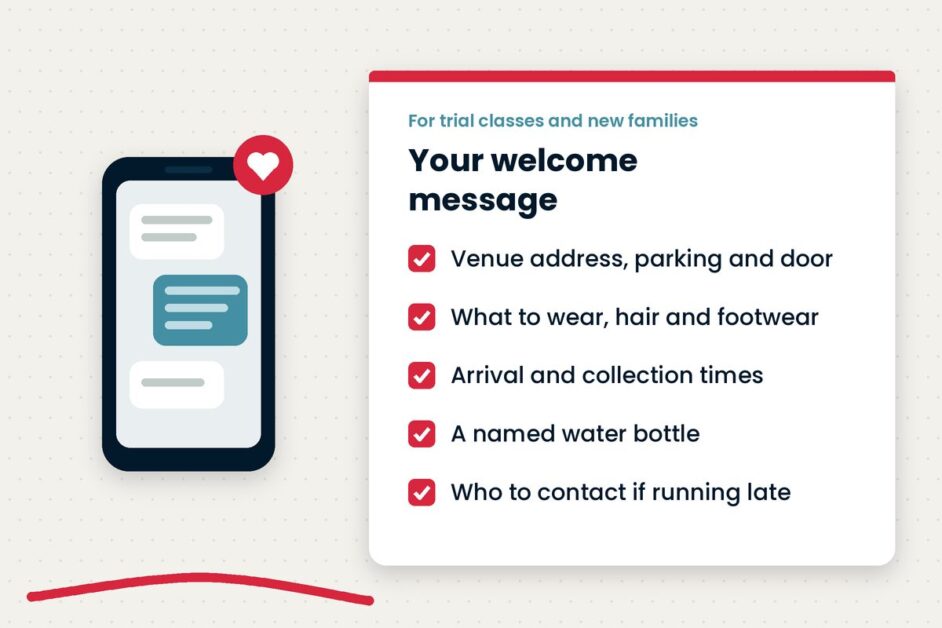
Send a clear welcome message
Families feel calmer when they know what to expect. A few days before the first class, send a short message with the essentials:
- the venue address, parking and the door to use
- what to wear, including hair and footwear
- what time to arrive and when to collect
- a named water bottle
- who to contact if they’re running late
Keep it friendly and short. A photo of the entrance can save a lot of confused wandering on the day.
Make the trial class feel like the real thing
A trial works best when it feels like a normal class, not a sales pitch. Let new dancers join a regular group, with a buddy who knows the routine. Explain clearly how to book a place afterwards.
Parents often want to see you before they commit. The DfE guidance encourages providers to let parents and carers meet them before or during a session. It says this helps reassure families that their child will be safe in your care.
The same guidance adds that visiting parents and carers aren’t exempt from your child protection policy and procedures. Your usual safeguarding habits still apply when a parent is in the room.
Keep your welcome form short and useful
A good form asks only what you need, and explains why. The DfE guidance suggests collecting more than one emergency contact number for each child. It also suggests noting any health conditions or medical needs, and the school the child attends.
It mentions the parent’s full name and the child’s home address, where reasonably possible. The NSPCC has an example consent form for activities and events, which the guidance points to as a starting point.
These forms hold personal information, so data protection law applies. The guidance suggests checking the Information Commissioner’s Office for more detail. Store forms securely and only share them with the people who need them.
Ask about each child’s needs
Some new dancers need a little extra thought to feel comfortable. The DfE guidance suggests talking with parents about any particular needs and how you’ll meet them. A quick chat before the first class is often all it takes.
If you’d like more ideas, the Teach.Dance practical guide to inclusive dance spaces is a useful read before term starts.
Plan a gentle first class
New dancers remember how a first class made them feel. Start with a name game, so everyone hears their name in the first five minutes. Show new children where the toilets and fire exits are.
Let shy dancers watch for a few minutes before joining in. Give them a small job, like helping you hand out ribbons. Finish with something simple they can show off at home.
Share your policies the friendly way
Clear policies help families trust you. Share your terms and conditions with every new family, in plain words. Our post on dance school terms and conditions explains why they’re worth getting right.
The DfE guidance also says you should have a clear complaints policy. It suggests publishing it on your website or displaying it in your setting. It should explain how to make a complaint, who to contact and how you’ll deal with it.
Check in after week one
A short message after the first week means a lot to new families. Ask how their child found it and whether they have any questions. It’s also a good moment to check their emergency contact details are right.
Your next step is to write your welcome message today. Then send it to every new family before their first class in September.
Teach.Dance · For Teachers, By Teachers




Responses