
Moving to a new dance class venue: what to check first

You’ve found it. A bright community hall, a free Tuesday evening and a rent you can live with. Before you sign up for September, your new dance class venue is worth one more careful visit.
Lots of dance schools start out in church halls and community centres. Our Teach.Dance story of one school’s move from church hall to dance empire shows how far a good hall can take you. This checklist draws on the Department for Education’s safeguarding guidance for out-of-school settings. It even includes an example of a dance teacher moving to a new hall. This is general guidance, so check the details for your own venue.
Start with the floor
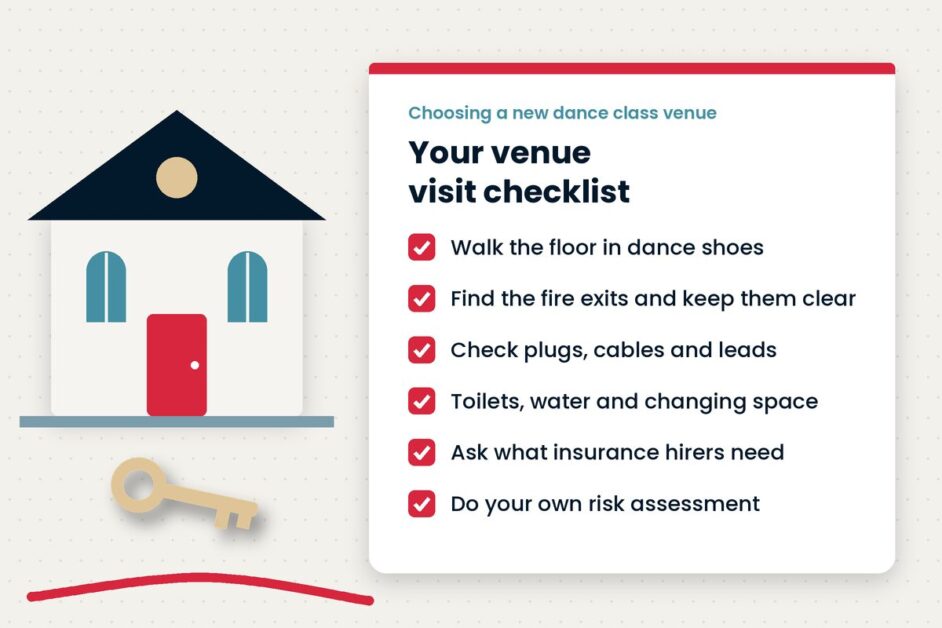
Dancers notice the floor in the first minute, and so should you. Walk it in the shoes your pupils will wear. Look for slippery patches, splinters, loose boards and anything sticking up.
Ask how the floor is cleaned and polished, and when. A freshly polished floor before a Saturday class can be a real slip risk.
The DfE example features a ballet teacher with pupils aged 5 to 12. Her risk assessment spots the risk of a child slipping while dancing. Her answer is simple: dance shoes are always worn in the hall, and no jewellery while dancing.
Ask the venue what they already have
A well run hall will have safety information ready for hirers. In the DfE example, the hall owners give the teacher a checklist they expect all hirers to follow. It includes the building’s fire risk assessment, evacuation instructions, the first aid box location and their public liability insurance statement.
The guidance also says that if you’re renting a venue, check it has complied with the Health and Safety Executive’s standards. Asking for this up front is normal, and good venues are happy to share it.
Do your own risk assessment too
The hall’s safety information covers the building, not your class. The DfE guidance says the teacher should still do her own risk assessment for the activity she’s hiring the hall for.
It also says that if you change venue, you should carry out a new risk assessment. Make sure every member of your team knows about any new steps.
If you have fewer than 5 employees or volunteers, the guidance says you don’t have to write down your health and safety policy. In the example, the teacher still records the steps she’s taken and tells parents about them. That’s a simple habit worth copying.
Fire safety in a shared building
Picture the fire alarm going off mid class, with twenty children in ballet shoes. Where do you go, and who counts heads? Sorting that out now keeps everyone calm on the day.
Under fire safety law, the person responsible for fire safety is called the “responsible person”. The gov.uk page on fire safety responsibilities explains there can be more than one. In shared premises, you’ll need to co-ordinate your fire safety plans.
The DfE guidance adds that an occupier, such as a self-employed person, can be a responsible person. It says this applies to community halls, places of worship and other community premises. Different rules apply in Scotland and Northern Ireland, so check your nation’s guidance if you teach there.
On your visit, find the fire exits and check they’re kept clear. Agree a safe meeting point outside. Ask who tests the alarm and how you’ll know if the hall’s plan changes.
Speakers, plugs and extension leads
Your speaker probably travels with you every week, so give it a quick look before each class. Check the plug, the cable and any extension lead for damage.
The Health and Safety Executive’s answers on portable appliance testing explain that the law requires electrical equipment to be kept safe. It says the regulations don’t make inspection or testing a legal requirement, or say it must happen every year. A simple user check is a useful part of keeping equipment safe.
Toilets, water and changing space
Think about the whole visit, not just the hour of dancing. Where will children change, and who else is in the building? Are the toilets close to the hall or down a corridor?
Toilets and drinking water are on the DfE list of facilities to check. The guidance also suggests a site risk assessment covering access and lighting. Visit at the time you’d actually teach, so you see the car park, the light and the other hirers.
Check your insurance
Before September, ask the venue what insurance it expects hirers to have. The DfE guidance says to make sure you have appropriate insurance cover, such as employers’ liability insurance. That one usually applies once you employ staff. If you’re unsure what you need, it suggests contacting your local Citizens Advice.
Tell families before the first class
A new venue is exciting, and a little confusing for families. Send the address, parking tips and the drop off and collection point in good time. Include your footwear and jewellery rules, so dancers arrive ready.
Your next step is a second visit with this checklist in hand. Walk the floor in dance shoes and find the fire exits before you sign.
Teach.Dance · For Teachers, By Teachers




Responses