
Why Same-Sex Partnerships Belong in Your Ballroom and Classical Sequence Classes

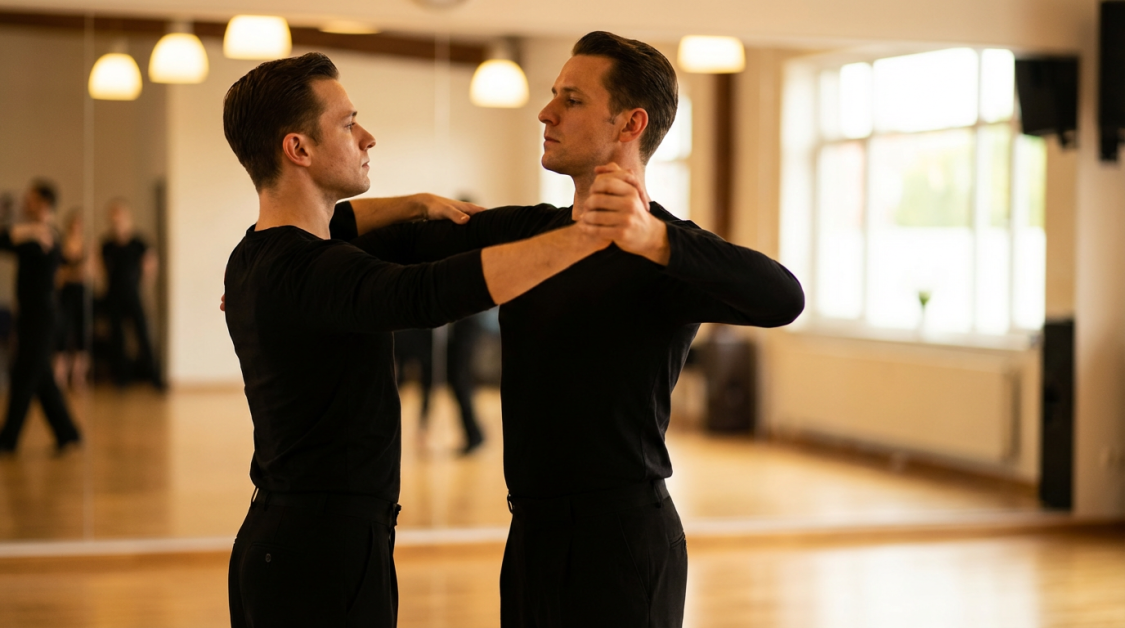
We’re used to seeing two men dance together in street formations. We don’t question two male gymnasts on the bars. So why does two men performing a tango still raise eyebrows in 2026?
Stuart Hatton Jr, a professional ballroom and classical sequence teacher, has spent years navigating this question—not just theoretically, but on competition floors where the rules, the adjudicators, and sometimes his own hesitation have shaped what’s possible.
His perspective matters because it comes from lived experience: as an out and proud LGBTQ+ dancer, a teacher working with students of all identities, and someone who’s felt the weight of wondering whether putting his hand on his hip instead of holding an imaginary skirt would cost marks.
This isn’t about pushing boundaries for the sake of it. It’s about recognising that dance is for everyone—and that our studios, competition circuits, and teaching practices need to reflect that.
What We Mean When We Talk About Equality in Dance
The terminology matters, especially if you’re teaching students who might be navigating these questions themselves.
Same-sex or same-gender dancing refers to two people who identify as the same gender dancing together. That could be two men, two women, or two non-binary individuals. On the open circuit, dancers choose a role (lead or follow) and stick with it. On the equality circuit, partners can swap roles mid-routine.
Equality dancing specifically refers to competition circuits designed to accommodate same-gender couples, with slightly different rules that allow for role flexibility. These circuits exist primarily because there wasn’t space for same-gender couples in traditional competitions—which raises the question of whether we’ll eventually see these worlds merge.
Then there’s the question we’re not talking about enough yet: what about non-binary dancers? The world is changing faster than our competition entry forms, and if we wait until someone asks, we’ve already left them behind.
As Stuart puts it: “We need to be proactive, not reactive. These conversations need to happen now so we have something in place, ready to go.”
The Rules We Follow (and the Ones We Question)
Here’s where it gets interesting. In classical sequence, the traditional rules are clear: one partner stands in open promenade with a hand on the hip (the “male” role), and the other holds the fabric of a skirt (the “female” role).
But what if you have two women dancing together who both want to hold skirts? Or two men who both want to dance with hands on hips?
Stuart was preparing to do exactly that—dance the Pro-Am at the British Championships with a male student, both of them with hands on hips, both dancing as men. They’d practised it. They were ready.
And then, moments before stepping onto the floor, he changed his mind.
“I said to myself, I don’t want this to affect your marks because I don’t know the views of the adjudicators on the floor. That shouldn’t have entered my head, but it did. So instead of putting my hand on my hip dancing as I wanted to as a man, I held my hand out in a horizontal position, holding the skirt, pretend to identify as a female.”
That moment matters. Not because Stuart made the “wrong” choice, but because he felt he had to make a choice at all. Even as a professional, even in 2025, the question was there: will this be accepted?
The answer should be yes. But until it’s unequivocally yes—until teachers, adjudicators, and competition organisers are aligned—dancers will keep second-guessing themselves.
What Strictly Got Right (and What It Revealed)
When Johannes Radebe and John Whaite danced together on Strictly Come Dancing, the response was split down the middle. Half the comments were supportive. Half weren’t.
Stuart’s initial reaction was telling: “Please don’t make it too gay.” Not because he was uncomfortable, but because he was worried about the backlash they’d face.
“They danced it strong. They danced it masculine. They were soft when they needed to be soft and they just danced. And they were good—they were excellent.”
The fact that we even have to qualify it as “they danced it well despite being two men” says everything. We don’t do that with street dancers. We don’t do that with formation teams where groups of men or groups of women perform together.
The issue isn’t the dancing. It’s what we’ve been conditioned to think ballroom “should” look like.
And now, with Lavoie (Chris) performing in drag on Strictly, the conversation is evolving again. We grew up watching Dame Edna Everage, Lily Savage, Mrs. Doubtfire. Drag has always been part of our cultural landscape, going back to Shakespeare when men played Juliet because women weren’t allowed on stage.
“It’s just fabric,” Stuart says. “And once you get over that first initial huh, you realise it’s just dancing.”
The Question Every Teacher Should Be Asking
If you’re reading this and thinking, “This doesn’t really apply to my studio,” consider this:
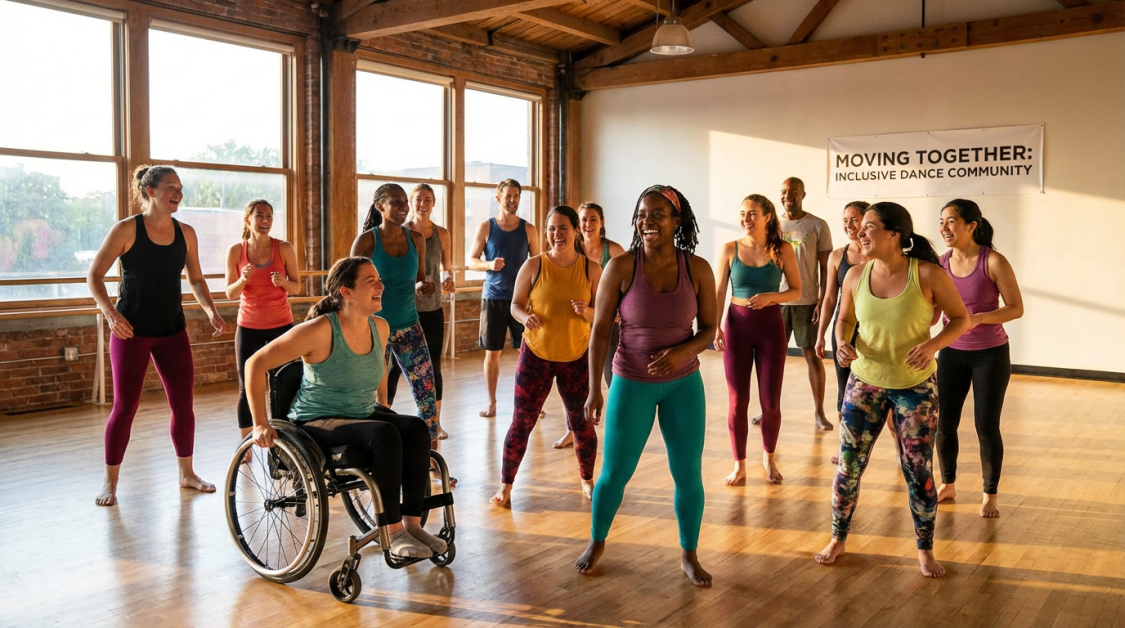
Your dance class might be the only safe space some of your students have. The only place where they can be their most authentic selves. The only hour in their week where they’re not worrying about fitting into a box that doesn’t feel right.
That’s true whether you’re teaching in a progressive city or a conservative town. Whether you have openly LGBTQ+ students or not (because you might, and they just haven’t told you yet). Whether you teach children, adults, or both.
Stuart’s advice to teachers is simple but vital: create a safe space.
“Right now in 2026, it is a funny world. There’s a lot of division. So I think my thing for teachers would be: create a safe space for those that feel othered, because your dance class could be the only safe haven that these people know.”
That doesn’t mean you need to overhaul your entire curriculum or make grand statements. It means:
- Not assuming everyone fits into “boys” and “girls” categories
- Being open to students dancing with whoever they feel comfortable with
- Using language that doesn’t reinforce outdated gender roles (“leaders and followers” rather than “men and women”)
- Questioning rules that exist simply because “that’s how it’s always been done”
- Making it clear, through your actions and your words, that everyone is welcome
If you’re looking for practical ways to foster inclusive environments across all your classes, the classroom management and student engagement resources on Teach.Dance offer strategies that apply whether you’re teaching early years or adult students.
What About Competitions?
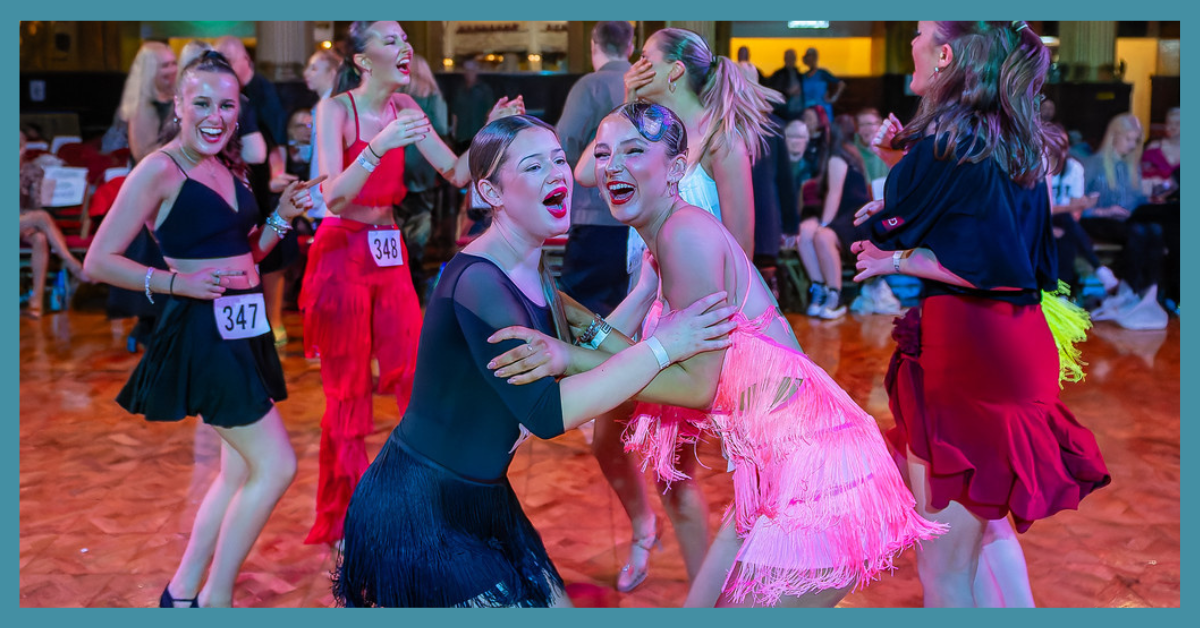
This is where it gets complicated. The equality circuit exists and is growing, particularly in London and across Europe. That’s a good thing. But it also exists because there wasn’t space in the open circuit—which means we’re still operating in two separate worlds.
Some competitions now allow same-gender couples on the open circuit, with the caveat that you choose your role and stick to it. That’s progress. But it’s not full equality, because the rules are still different depending on who you’re dancing with.
And what about adjudicators? Stuart’s hesitation before stepping onto the floor wasn’t unfounded. Until there’s clear, consistent messaging from governing bodies and competition organisers that same-gender couples will be judged on their dancing alone—not on whether they “fit” traditional expectations—dancers will keep wondering.
The foundations of ballroom and Latin technique remain the same regardless of who’s dancing. Poise, frame, musicality, connection—none of that changes based on gender. So why should the rules?
The Bigger Picture: What Comes Next
Here’s the thing that keeps coming up in conversations about equality in dance: we’re always one step behind.
We’ve just about accepted two women dancing together (though often still with the caveat that it’s because there aren’t enough men). We’re getting there with two men, slowly. But what about:
- A man and a woman dancing together with reversed roles—her leading, him following?
- Non-binary dancers who don’t fit into the Mr. or Miss boxes on entry forms?
- Dancers who want to switch roles mid-competition, not because they’re on the equality circuit, but just because they can?
These aren’t hypothetical questions. These are dancers who exist right now, who want to compete, who want to take exams, who want to be part of the dance world without having to squeeze themselves into categories that don’t fit.
“Dance is just dancing, regardless of your gender,” Stuart says. “But let’s make it accepting for everyone.”
If you’re working towards teaching qualifications and wondering how these conversations might come up in your exams or your teaching practice, Jackie’s expert tips for dance teaching success include guidance on adapting to diverse student needs—something that’s increasingly relevant as our understanding of inclusion evolves.
What You Can Do Right Now
You don’t need to wait for governing bodies to change the rules. You don’t need permission to make your studio a more inclusive space. Here’s what you can start doing today:
In your classes:
- Watch your language. “Leaders and followers” is more inclusive than “boys and girls.”
- Let students choose their partners without making assumptions.
- If you demonstrate with a teaching assistant or another student, occasionally show partnerships that aren’t male-female.
- Don’t make a big deal out of it. Just normalise it.
In your thinking:
- Question why certain rules exist. Is it about technique and safety, or is it just tradition?
- When you see two men or two women dancing together, assess them on their dancing—not on how well they fit a gendered expectation.
- Recognise that your personal comfort level might be the thing that needs adjusting, not the dancing itself.
In your community:
- Have these conversations with other teachers. The more we talk about it, the more normal it becomes.
- Support competition organisers and governing bodies that are making space for equality dancing.
- If you’re involved in adjudicating, examine your own biases. Are you marking the dancing, or are you marking your assumptions?
A Final Thought
Stuart’s story about almost dancing with his hand on his hip, then changing his mind at the last second, is powerful because it’s honest. He’s a professional dancer, someone who’s out and proud, someone who should have felt confident making that choice.
But he didn’t. Because even in 2025, even with all the progress we’ve made, there’s still a question mark.
The goal isn’t to erase tradition or pretend that ballroom and Latin don’t have rich histories rooted in partnership dynamics. The goal is to recognise that dance is bigger than any one tradition. It’s movement, connection, music, and expression—and none of that requires a specific set of genitals or a specific gender identity to be valid.
“If anybody does question it,” Stuart says, “it’s more really on them than it is anybody else. Because it’s dancing.”
He’s right. And the sooner we all internalise that, the sooner every dancer—regardless of who they are or who they’re dancing with—can step onto the floor without hesitation.
Ready to Deepen Your Teaching Practice?
Whether you’re exploring new ways to make your classes more inclusive or looking to strengthen your technical foundations across ballroom, Latin, and classical sequence, Teach.Dance offers courses and resources designed specifically for teachers like you.
From classical sequence qualification training to expert-led content on technique and student engagement, you’ll find practical support for every aspect of your teaching journey.





Responses