
It’s a dark Tuesday in November. A dancer arrives sniffing, a parent hovers at the door and asks the question we all hear this time of year: are they too ill for dance class? Coughs, colds and tummy bugs do the rounds every winter. A clear, calm plan means you can answer that question kindly and consistently, and keep the rest of your class dancing.
Here’s how we approach it, from sniffles and temperatures to hand washing and fresh air. We also cover what to do when someone feels poorly halfway through a routine.
Is a dancer too ill for dance class?
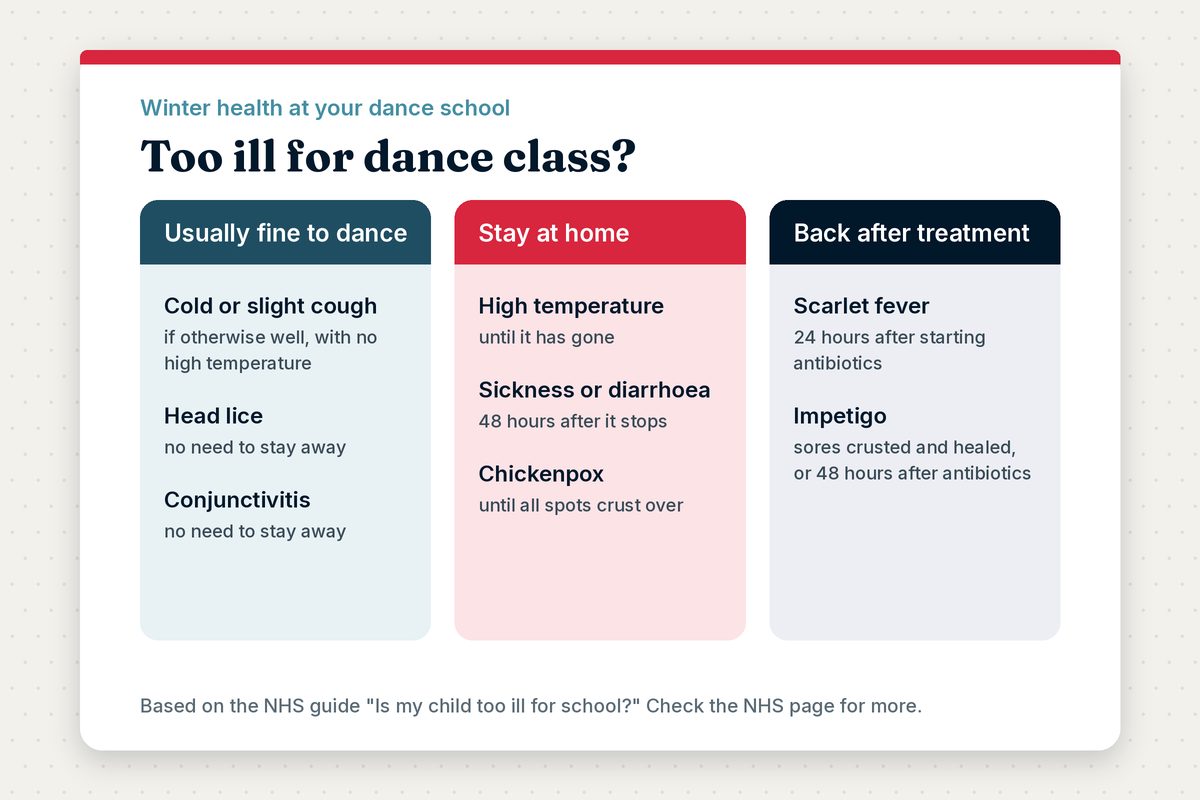
There isn’t a separate rule book for dance schools, so we use the NHS guidance for schools as our starting point. The NHS page is my child too ill for school? is clear, friendly and easy to share with families. Here’s what it says about some of the illnesses you’ll see most often:
- Coughs and colds: fine to come in if they’re otherwise well and don’t have a high temperature.
- High temperature: stay at home until it has gone.
- Diarrhoea or being sick: stay away until 48 hours after it has stopped.
- Chickenpox: stay away until all the spots have crusted over, which is usually around 5 days.
- Scarlet fever: back 24 hours after starting antibiotics.
- Head lice, conjunctivitis, and hand, foot and mouth: no need to stay away.
The NHS page covers lots more, including impetigo, measles and flu, so it’s worth bookmarking. For the full detail, the UK Health Security Agency has guidance on health protection in children and young people’s settings. It’s written for schools and nurseries, but plenty of it translates well to a dance studio.
Dancing with a cold: adapt, don’t push
A dancer with a runny nose who’s otherwise well can usually join in. They might still feel a bit flat, though, so give them choices rather than pressure. Let them mark the jumps, take an easier line in the routine or stop for a sip of water whenever they need to.
If a dancer would rather sit and watch, that’s fine too. Give them a job, such as spotting the best pointed feet or writing down the counts for a new section. They stay part of the class and they still learn something.
Keep a box of tissues and a lidded bin in the studio all winter. It sounds small, but it saves a lot of sleeves.
Simple hygiene habits for the studio
Good habits matter more than any spray or gadget. The UKHSA guidance on preventing and controlling infections recommends liquid soap, warm running water and paper towels for hand washing. It also notes that alcohol hand gel isn’t effective against norovirus, the winter vomiting bug, so soap and water should come first.
- Wash hands well. The NHS guide to the best way to wash your hands says to take about 20 seconds, about as long as singing Happy Birthday twice.
- Catch coughs and sneezes. Use a tissue, bin it, then clean hands. No tissue? Cough or sneeze into the inside of the elbow.
- One dancer, one bottle. Ask everyone to bring a named water bottle and never share.
- Wipe shared props. Ribbons, hoops and barres get handled a lot. UKHSA says cleaning with detergent and water is normally all that’s needed for touch surfaces.
- Cover cuts. UKHSA advises covering cuts and grazes with a waterproof dressing.
For little ones, turn it into a game. UKHSA has free hand hygiene resources for ages 3 to 16 on the e-Bug website. Some of the activities slot nicely into a short chat before class.
Fresh air without freezing
Ventilation matters in a busy studio, especially when everyone’s breathing hard. The UKHSA guidance talks about opening windows where it’s safe, and using higher level windows to reduce draughts. In the colder months, it suggests opening windows more when the room is empty between lessons.
That works well with a dance timetable. Throw the windows open during the changeover, then ease them closed again once the next class starts to warm up. One Dance UK’s Industry Standards also ask for dance spaces that are well ventilated, with heating at a comfortable 21C and not below 18C. If your hall is properly chilly, our winter weather plan for dance schools has ideas for cold halls.
When a dancer becomes unwell in class
Even with the best plan, someone will feel poorly mid class. Keep it calm and simple:
- Sit the dancer somewhere comfortable where they can be seen by you or another adult, never alone in a corridor or changing room.
- Call their parent or carer and agree a collection time.
- Keep them with an adult until they are collected, just as you would at the end of class.
- Make a short note of what happened and when.
If someone is sick, clear everyone away from the area first. UKHSA says to clean up spills like vomit straight away, wearing gloves, plus an apron if splashing is likely. A simple spill kit makes this much easier. Our guide to first aid kits, first aiders and records covers the rest of that box.
Being seen and never left alone is good safeguarding as well as good care. Our partner BDSA has a free online course, Introduction to Safeguarding in Dance (Level 1), powered by Teach.Dance. It’s a great refresher for everyone who helps out at your school. Our drop off and collection guide covers the handover side too.
Tell families what to expect
A short winter health note in your newsletter heads off a lot of awkward conversations at the door. Keep it friendly and practical. Link to the NHS page, say when a dancer should stay at home, and remind families how to let you know.
It’s a good moment to explain what happens about missed classes, too. Whatever you decide, put it in writing so it’s fair for everyone. Our guide to dance school terms and conditions can help.
Health information needs extra care, so only share what’s needed to keep a dancer safe. Our guide to photos, data protection and medical forms explains why.
Families often ask about flu at this time of year. The NHS page on the children’s flu vaccine explains who is eligible, so you can point them there rather than giving advice yourself.
Look after yourself too
Teachers catch every bug going, and our voices take a battering in winter. Have a cover plan before you need it, so a sore throat doesn’t mean a cancelled class. Our tips on vocal health for dance teachers and self care for dance teachers are worth a read before the busy run up to Christmas.
Your winter health checklist
- Bookmark the NHS guide and share it with families.
- Stock liquid soap, paper towels, tissues and a lidded bin.
- Ask every dancer to bring a named water bottle.
- Plan when to open windows during your changeovers.
- Add disposable gloves, aprons and a spill kit to your first aid box.
- Agree what happens when a dancer feels unwell in class.
- Write down your missed class policy.
- Line up cover in case you’re poorly yourself.
This post is general guidance for dance teachers, not medical advice. If you’re worried about a dancer’s health, families can contact NHS 111 or their GP.
A little preparation now means fewer cancelled classes and calmer conversations at the door. Stay well, keep those windows open between classes, and here’s to a healthy winter term.
Teach.Dance · For Teachers, By Teachers








Responses