
Dance teacher first aid: kits, first aiders and records

It’s the last ten minutes of a Thursday acro class. A dancer lands a cartwheel awkwardly and sits down holding her wrist. Everyone looks at you. In that moment, a clear first aid plan means you know exactly where the kit is, who does what and how to reach her parent.
Good first aid planning is part of looking after our dancers, and it gives families real confidence in your school. We’ll walk through dance teacher first aid: needs assessments, kits, first aiders, head bumps and accident records. This is general guidance, not legal or medical advice. For your own situation, check the Health and Safety Executive (HSE) guidance or get advice.
First aid and the law: the basics
The rules come from the Health and Safety (First-Aid) Regulations 1981. The HSE’s page on first aid legislation says they apply to all workplaces, including those with fewer than five employees and the self-employed. Employers must provide adequate and appropriate equipment, facilities and people. That way, employees who are hurt or taken ill at work get immediate attention.
Here’s the bit that matters most for us. The regulations don’t place a legal duty on employers to make first aid provision for non-employees, such as members of the public. However, the HSE strongly recommends including non-employees in your first aid needs assessment and making provision for them. For a dance school, that means planning for your dancers, not just your staff.
Teaching on your own
If you’re self-employed, the HSE says you need equipment that’s adequate and appropriate to give first aid to yourself at work. Perhaps you teach in a hall or community centre shared with other groups. The HSE says it’s sensible to make joint arrangements with others on the premises. Ask the venue what first aid provision is already in place.
Start with a first aid needs assessment
What’s adequate and appropriate depends on your circumstances, the HSE explains. A needs assessment looks at the hazards and risks, the size of your school and other relevant factors. It helps you decide what equipment, facilities and trained people you need.
In a dance school, you might think about:
- the styles you teach, such as acro, tap or contemporary floor work
- the ages and number of dancers in each class
- dancers with medical conditions such as asthma, epilepsy or allergies
- whether you teach alone or with assistants
- busy times, like show week, holiday intensives and competition trips.
The HSE’s free leaflet, First aid at work: your questions answered, has a checklist to help you through it.
What to put in your first aid kit
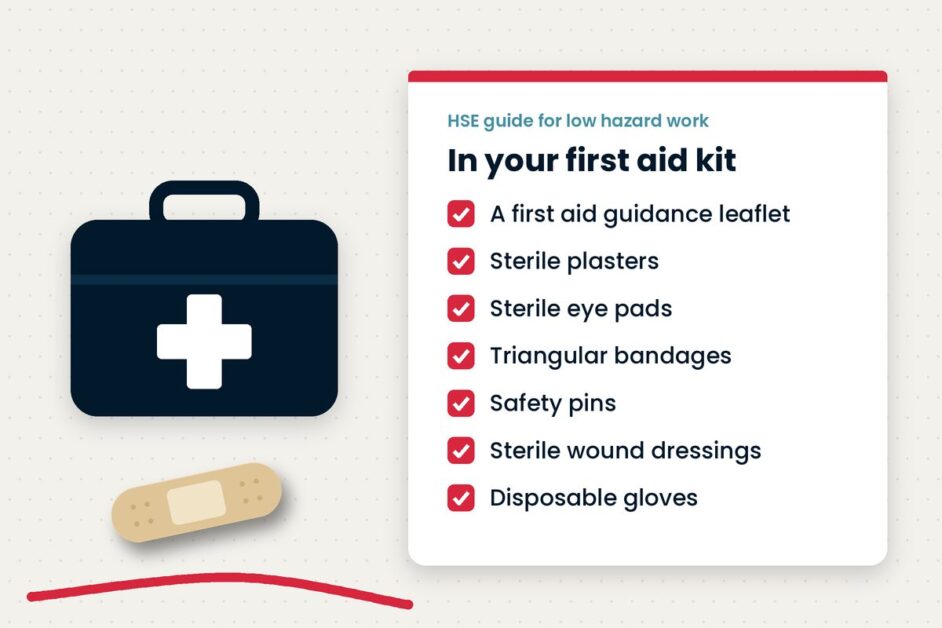
At a minimum, you need a suitably stocked first aid box, according to the HSE’s first aid FAQs. As a guide for low hazard work, it suggests a minimum stock of:
- a leaflet with general first aid guidance
- individually wrapped sterile plasters in assorted sizes
- sterile eye pads
- individually wrapped triangular bandages
- safety pins
- large and medium sterile, unmedicated wound dressings
- disposable gloves.
The HSE says this is only a suggested list, and your kit should reflect your needs assessment. It also recommends not keeping tablets and medicines in the first aid box. Check expiry dates on sterile items and replace them in time. A kit that travels with you to halls, shows and competitions is a good idea too.
Inhalers and other medication
The HSE explains that first aid at work doesn’t include giving tablets or medicines to treat illness, with one specific exception for suspected heart attacks. If someone needs to take their own prescribed medication, such as an asthma inhaler, the first aider’s role is generally to help them do so. Ask families on enrolment about any medication their child carries, and agree a simple plan for where it’s kept during class.
First aiders and appointed persons
How many first aiders do you need? The HSE says there are no hard and fast rules. Your needs assessment will help you decide. If it shows a first aider isn’t necessary, the minimum is an appointed person. They take charge of first aid arrangements, look after the equipment and call the emergency services when needed.
Appointed persons don’t need first aid training, but emergency first aid courses are available. We’d suggest having at least one trained first aider on site, especially for acro and big group classes. That’s our suggestion as teachers, not an HSE rule. The HSE says annual refresher training isn’t mandatory, but strongly recommends it to keep skills up to date.
Defibrillators come up a lot too. The HSE notes that health and safety law doesn’t require an automated external defibrillator (AED) in your workplace. If your venue has one, find out where it is and make sure your team knows.
Head bumps and when to get help
Falls and collisions happen, especially in acro and lively group classes. The NHS page on head injury and concussion says most head injuries aren’t serious, but it’s important to get medical help for any symptoms. It lists signs that mean you should call 999. These include being knocked out and not waking up, a fit, or problems with walking, balance or speaking.
The NHS also advises getting help from NHS 111 if someone is sick or feels dizzy after a head injury. After a minor head injury, it says children should avoid rough play for a few days. That’s useful to share with parents if a dancer bumps their head in class.
Accident records and RIDDOR
A simple incident book is good practice. The HSE suggests giving first aiders and appointed persons a book to record the incidents they attend. Useful details include:
- the date, time and place
- the name of the injured or ill person
- what happened and what first aid was given
- what happened afterwards, such as going home or to hospital
- the name and signature of the person who dealt with it.
These records help you spot patterns, like a slippery corner of the floor or a step that keeps causing trips. Let parents know about any injury at pick up, and keep your notes factual.
Do I need to report it?
Some incidents must be reported to the HSE under RIDDOR, the Reporting of Injuries, Diseases and Dangerous Occurrences Regulations. The HSE’s page on types of reportable incidents covers accidents to people who aren’t at work. These must be reported if they involve work activity, cause an injury and the person goes straight from the scene to hospital for treatment.
Sport and dance injuries need a little thought. The HSE’s examples of reportable incidents say most sporting injuries aren’t reportable, because they come from normal participation in the activity. You only report them if they arise out of, or in connection with, a work activity. Examples include defective equipment, or failings in how an event is organised and managed. Where a report is needed, the HSE says it must be received within 10 days of the incident.
A clear first aid plan sits naturally alongside your safeguarding and wellbeing routines. If acro is on your timetable, the Teach.Dance guide to adding acro to your dance school covers the practical side. Our post on safeguarding at dance competitions helps you plan for trips away.
Quick FAQ
Do I legally have to provide first aid for my students?
The HSE says the regulations don’t place a legal duty on employers to provide first aid for non-employees. It strongly recommends including them in your needs assessment and making provision, and for a dance school that’s simply good practice.
Can I give a dancer paracetamol?
The HSE explains that first aid at work doesn’t include giving tablets or medicines to treat illness. It also recommends not keeping them in the first aid box. Contact the parent or carer instead.
Do I need a defibrillator?
The HSE notes that health and safety law doesn’t require one. If your venue has an AED, make sure your team knows where it is.
Teach.Dance · For Teachers, By Teachers




Responses