
It’s the last class before Christmas and a parent catches you at the door. “So when are you back?” You’re tired, the hall is full of tinsel and you can’t quite remember the date you told the Tuesday group. A simple dance school Christmas closure plan sorts all of that out in one go.
It’s also good business. Clear dates, fees paid before the break and a team that knows where it stands let you switch off properly. Then you come back in January to full classes.
Pick your dates and tell families now
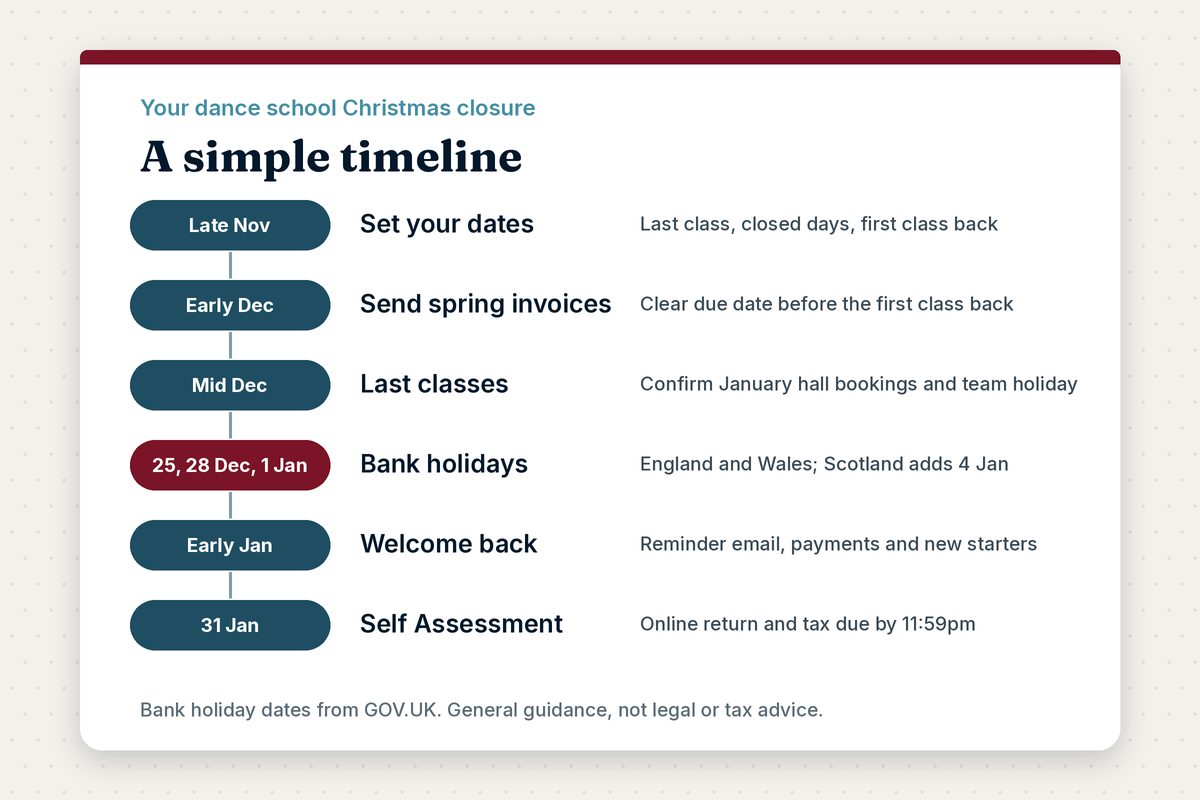
Start with the bank holidays. GOV.UK’s bank holidays page lists this year’s dates. In England and Wales they’re Friday 25 December, Monday 28 December and Friday 1 January 2027. The Monday is a substitute day, because Boxing Day falls on a Saturday. Northern Ireland has the same dates. Scotland adds a substitute day for 2 January on Monday 4 January.
Then choose three dates and stick to them: your last class of the term, the days you’re closed, and your first class back. Many schools follow the local primary school holidays, which also helps families who juggle childcare. Your council website lists them.
Tell families in writing, in more than one place. An email, a message in your booking app, a post on social media and a poster on the hall door all help. Put the first class back in bold, because that’s the date people forget.
Check your venue over the break
If you hire a hall, ask the booking secretary now whether it’s closed over Christmas, and confirm your January bookings while you’re on the phone. Church halls and community centres often change their hours in the holidays. It’s much easier to sort out in November than on the first Monday back.
If you have your own studio, think about heating, frozen pipes and who checks the building while you’re away. Our winter weather plan for your dance school covers cold studios, snow days and cancellations in more detail. If you’re moving venue in the new year, our checklist for a new dance class venue is worth a look.
Send spring term fees before you break up
December is a busy month for family budgets. Send your spring term invoices in early December, with a clear due date before the first class back. It gives parents time to plan and saves you chasing payments in January.
A good spring term invoice makes life easy for everyone. It should show:
- the class name, day and time
- the dates of the term and the number of weeks
- the total amount and the due date
- how to pay, and who to contact with questions
- what happens if a class is missed or cancelled
If your fees are going up in January, give families plenty of notice and explain why. Our guide to handling price increases at your dance studio has a kind way to word it. It’s also a good moment to check your dance school terms and conditions still match how you work, including your missed class policy. Our post on winter coughs, colds and bugs has ideas for that.
If families book by phone or online, GOV.UK’s guide to online and distance selling explains what you must tell them before they pay. That includes the price, the billing period and how they can cancel. It also lists some exceptions, including services worth £42 or less. If you’re thinking about moving bookings online, our look at software for running a dance school compares the options.
January can be tight for some families. If you can offer to split the term fee into two or three payments, say so on the invoice. It’s a small thing that keeps dancers dancing.
Sort your team’s holiday
If you employ assistants or teachers as workers, they have holiday rights. GOV.UK’s holiday entitlement guide says almost all workers are entitled to 5.6 weeks’ paid holiday a year. Workers with irregular hours, or who only work part of the year, build up leave based on the hours they’ve worked. Bank holidays don’t have to be given as paid leave, but an employer can count them as part of statutory leave.
So it’s worth checking now how the Christmas closure fits with your team’s holiday, and telling them in writing. Our posts on dance school assistants’ pay and safer recruitment and employed or self-employed teachers explain who counts as a worker.
The quieter weeks are also a lovely time to invest in your team’s safeguarding. If someone new is starting in January, get their checks sorted before the break. Our guide to the DBS changes for dance teachers explains the current rules. The free Introduction to Safeguarding in Dance (Level 1) course is a BDSA course powered by Teach.Dance. It’s an easy one for assistants to complete over the holidays.
Make sure families still know who to contact if they have a worry while you’re closed. That’s usually your designated safeguarding lead, and our post on what a designated safeguarding lead does covers the role. It shows parents you take their children’s safety seriously all year round.
Use the break for your own admin
If you’re self-employed, the Christmas break is a sensible time to make a start on your tax return. GOV.UK’s Self Assessment deadlines page says online returns for the 2025 to 2026 tax year must be in by 11:59pm on 31 January 2027, and any tax you owe must be paid by then too. If you want to pay through your tax code, the online return needs to be in by 30 December 2026.
Our guide to Self Assessment for dance teachers walks through the dates and the records you’ll need.
Plan a warm welcome back in January
Send a short reminder email a few days before your first class back, with the time, the venue and anything dancers need to bring. It’s a friendly nudge, and it catches the families who missed the December message.
January is also one of the best times of year for new starters. Our post on welcoming new families with trial classes and our guide to filling your dance classes in January will help you plan ahead. If you’re adding classes, our timetable planning guide is a good place to start.
Your Christmas closure checklist
- Choose your last class, closed dates and first class back.
- Tell families by email, app, social media and a poster on the door.
- Confirm hall bookings for January, or arrange building checks for your studio.
- Send spring term invoices in early December with a clear due date.
- Give notice of any fee changes and check your terms still fit.
- Agree holiday with your team in writing.
- Sort checks for new starters and share the free Level 1 safeguarding course.
- Tell families who to contact with a concern while you’re closed.
- Make a start on your Self Assessment return.
- Send a welcome back reminder in early January.
This is general guidance, not legal or tax advice. If you’re unsure about a particular situation, check GOV.UK or get advice.
Then switch off, enjoy the break and come back ready for a brilliant spring term. You’ve earned it.
Teach.Dance · For Teachers, By Teachers








Responses