
Opening the Door: BDSA and Sport Excel UK’s New Partnership for Inclusive Dance

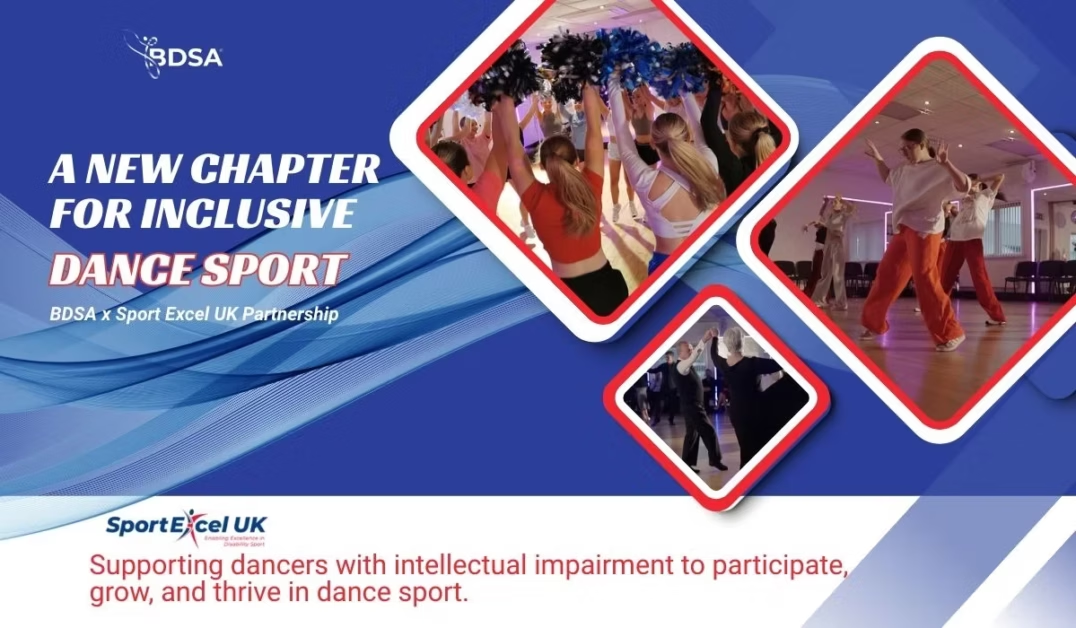
If you’ve ever had a student in your class who you knew had so much to give but wasn’t quite sure where to find their space in dance — or if you’ve wondered what resources might exist to help you teach dancers with intellectual impairment — this partnership is worth your attention.
The British DanceSport Association (BDSA) and Sport Excel UK have just announced a collaboration aimed at building sustainable, supportive pathways for dancers with intellectual impairment, including intellectual disability, Down syndrome, and autism. It’s a genuine commitment to creating real opportunities where dancers can train, progress, and eventually compete at meaningful levels.
Here’s what’s actually happening. BDSA and Sport Excel UK are working together on four practical fronts: increasing awareness and understanding of intellectual impairment in dance; developing welcoming participation opportunities; building knowledge and confidence among coaches and volunteers; and establishing the groundwork for potential competitive pathways in future. Sport Excel UK brings the expertise — they manage classification and athlete development systems across the UK — while BDSA brings the dance-specific infrastructure and governance.
What This Means for You
Let’s be honest: many of us didn’t train in how to teach dancers with intellectual impairment. It’s not something that typically appears in standard dance qualifications. Yet these dancers turn up in our studios, our church hall classes, our Saturday morning groups — sometimes with brilliant potential and sometimes with support needs we’re not quite sure how to navigate. We want to include them properly. We’re just not always sure where to start.
This partnership addresses exactly that gap. By connecting coaches and teachers with Sport Excel UK’s expertise on athlete development, classification, and disability sport frameworks, the collaboration is creating a route for dance professionals to upskill and understand what inclusive teaching actually looks like in practice. The partnership also promises to connect dance educators with wider disability sport networks and organisations, so you’re not working in isolation.
The practical upshot? Teachers like you will eventually have clearer guidance on accessibility, classification systems, coaching techniques, and the potential for your students to move into competitive structures if they want to. This isn’t replacing Sunday ballet classes in a church hall — it’s creating a genuine pathway from beginner participation through to performance opportunities, should a dancer and their support network want to pursue it.
Next Steps
This partnership is still in its early stages. The BDSA website and their connected networks will be the place to watch for resources, guidance, and training opportunities as they develop. If you teach dancers with intellectual impairment, or if you’ve wanted to be more inclusive but weren’t sure how, this is a signal that support and expertise are coming.
Keep an eye on BDSA communications. The dance community is building something better here — and that includes teachers like you.






Responses