
Creating an Inclusive Dance Space: A Practical Guide for Dance Teachers

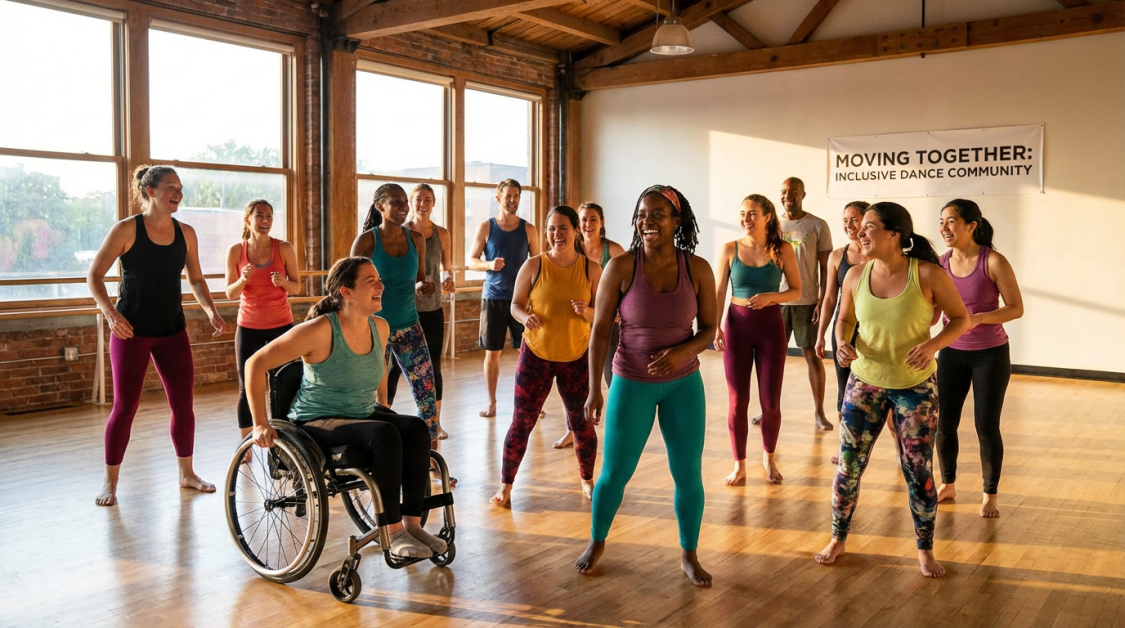
When Dawn Vickers talks about inclusion in dance, she speaks from a place of deep personal and professional experience. As Joint CEO of Phab Ltd and Director of Spring into Action, she’s dedicated her career to disability inclusion. But it’s her brother Craig’s story that brings the conversation home. Craig, who has Down syndrome, started dancing at 17. Now 50, he’s stayed with them all these years, remains medication-free, and thrives in his independence. The family credits dance with keeping Craig well and fulfilled.
“Dance has been the most impactful thing in his life,” Dawn shares. It’s a powerful reminder that when we get inclusion right, we’re not just teaching steps. We’re potentially transforming lives.
If you’ve felt unsure about how to make your dance classes more inclusive, you’re not alone. Many teachers worry about getting it wrong or simply don’t know where to start. The good news? Creating an inclusive dance space is more achievable than you might think, and it starts with one crucial element.
Attitude Is Everything
Before we talk about ramps, lighting, or adaptive choreography, let’s address the foundation of inclusive practice: your attitude.
“Attitude is everything,” Dawn emphasises. “Always I would say this because you can get there.”
What does the right attitude look like? It’s approaching situations with curiosity rather than fear. It’s asking “how can we make this work?” instead of “this is too difficult.” It’s being willing to test, adapt, and yes, sometimes get it wrong.
“If you present as a person who wants to include people and is positive and caring, then you’re not going to get it wrong,” Dawn reassures.
This mindset shift matters because disabled people and their families can sense your approach immediately. When you create a welcoming atmosphere where everyone feels they belong, you’ve already cleared one of the biggest barriers to inclusion.
For more insights on creating supportive environments, explore our resources on classroom management and student engagement.
Busting Common Myths About Disabled Dancers
Let’s tackle some misconceptions that might be holding you back:
Myth: Disabled people can’t dance. Reality: Everyone can dance. Dance is about self-expression and movement, about achieving what you can achieve as an individual and challenging yourself. It’s not about conforming to a single standard of perfection.
Myth: It’s not “real” dance if it’s adapted. Reality: Dance is an incredibly broad art form that encompasses many styles and approaches. Adapted dance is absolutely real dance, just as valid and artistic as any other form.
Myth: Dance isn’t safe for disabled people. Reality: With appropriate adjustments and communication, dance is safe and beneficial. In fact, the physical, mental, and social benefits of dance are profound for disabled dancers, just as they are for everyone else.
Myth: We need separate “special” classes for disabled dancers. Reality: Whilst specialist sessions have their place, the goal should be inclusion in mainstream classes wherever possible. This benefits everyone by celebrating diversity and breaking down barriers in your wider community.
Understanding Reasonable Adjustments
The term “reasonable adjustment” comes from the Equalities Act 2010. It’s law, and it requires that we don’t discriminate and that we make adaptations for people with protected characteristics, including disability.
But what does “reasonable” actually mean in your dance studio?
Dawn explains: “It may be a physical adjustment, but it could be attitude, it could be language, it could be labelling, it could be misconceptions or preconceptions, judgement, bias.”
We all have bias based on our individual experiences, and some of it is unconscious. The key is being open to recognising and challenging these biases within yourself and your team. This is where peer support and honest conversation become invaluable.
Practical Adjustments for Your Dance Space
Let’s get specific about what you can adapt:
Physical Space and Environment
Think about clear pathways into and through your dance space. Can a wheelchair user navigate easily? Are there ramps where needed? Consider your doors—are they wide enough?
Lighting and sound matter more than you might realise. Some students may be sensitive to bright lights or loud music. Ask questions: Does this individual do better with energetic music and bustle, or do they need the volume turned down?
“Always, always ask questions. Never be fearful of asking questions,” Dawn advises. “Take the lead from the individual or the parent carers involved because they know what they need.”
Movement Modifications
Adapting choreography doesn’t mean lowering standards. It means thinking creatively:
- Consider seated dance options for wheelchair users or those with mobility challenges
- Use props to support different movement capabilities
- Adjust tempo—some students may need slower music to process and execute movements
- Think about travelling movements (more on this below)
Communication Adjustments
How you communicate can make or break inclusion:
- Use visual aids alongside verbal instructions
- Consider nonverbal communication like gestures and body language
- Be aware that some students may be nonverbal themselves and communicate in other ways
- Demonstrate movements clearly and from multiple angles
Class Structure Flexibility
Can you offer shorter or longer sessions depending on individual needs? What about open-ended goals that focus on enjoyment and self-expression rather than perfect execution?
This doesn’t mean abandoning technique or progression. It means recognising that different students may progress at different rates and celebrate achievements that are meaningful to each individual.
The Language of Inclusive Dance
Words matter. The language we use in dance classes can either include or exclude.
Dawn shares a brilliant example: “Instead of walking or stepping, you might say travelling, which includes everybody because everyone can travel across a space and that includes wheelchair users.”
This simple shift opens up choreography to everyone without compromising the artistic intent.
When it comes to talking about disability itself, language is evolving. Many organisations now use the social model of disability, which Dawn explains clearly:
“A person’s body or medical condition is not the thing that disables that person from being included in society. It’s the barriers that are out there in society.”
This means saying “disabled people” rather than “people with disabilities,” because the person doesn’t own a disability—society disables them by creating barriers. If someone corrects your language, receive it openly. We’re all still learning, and the most important thing is your genuine desire to include and welcome everyone.
For related guidance on creating equitable environments, see our article on equality in dance.
Creating an Emotionally Safe Space
Physical accessibility is only part of the picture. Emotional safety is equally crucial.
This means:
- Creating a respectful, welcoming atmosphere from the moment someone walks through your door
- Fostering peer support and friendship among all students
- Celebrating progress and achievements that are adapted to each individual
- Recognising that a small achievement for one student may be as significant as a major milestone for another
Remember, the friendships and social connections formed in your dance space extend into wider society. When disabled and non-disabled children dance together, they’re learning inclusion that they’ll carry into their schools, their social lives, and eventually their workplaces.
Focus on Joy and Expression
At its heart, dance is about creativity, self-expression, and joy. When inclusion is working well, this doesn’t change—it expands.
“It’s about unlocking that wonderful potential within an individual so they can express themselves through dance and have fun and creativity and where all your dance students feel valued and that they are able to achieve,” Dawn explains.
If you can create a space where every student feels valued and capable of achievement, you’re doing something remarkable. You’re not just teaching dance. You’re building confidence, fostering independence, and potentially changing the trajectory of someone’s life.
Getting Started: Your Next Steps
Feeling overwhelmed? Start small:
- Reflect on your current practice. Where are you already doing well with inclusion? Where could you improve?
- Talk to your team. Have open, honest conversations about attitudes, concerns, and ideas. Identify champions in your organisation who have experience or passion for inclusive practice.
- Ask questions. When a disabled student or their family enquires about classes, engage in conversation. What do they need? What works well for them? What concerns do they have?
- Try one adjustment. Pick something manageable—maybe it’s the language you use, or adjusting your lighting, or creating clearer pathways in your studio. See how it goes.
- Celebrate and share. When something works well, share it with your team and your wider network. Good practice spreads when we talk about it.
Dawn’s final encouragement is this: “If you do half of that, you’re well on your way to a really inclusive space for everybody.”
You don’t need to be perfect. You need to be willing, open, and committed to trying. The impact you can have is immeasurable.
Continue Your Inclusion Journey
Want to deepen your understanding of creating welcoming, equitable spaces for all dancers? Explore more resources in our Safeguarding & Inclusivity section, where you’ll find expert guidance on building a truly inclusive dance education practice.
Join the Teach.Dance community today to access exclusive courses, connect with fellow educators committed to inclusion, and transform your teaching practice.




Responses