
Dance exam nerves: helping students feel ready

Exam season brings a special kind of buzz to the studio. Dancers who have worked on their set work for months finally get to show an examiner what they can do. It’s a proud moment. For some students, though, the weeks before an exam bring butterflies that grow bigger as the day gets closer.
The good news is that a calm, confident exam experience is something you can plan for. Much of it comes down to familiarity, kind language and small routines that help dancers feel in control. This post draws on NHS advice for young people and parents, and shares practical ideas you can bring into your own classes. It’s general guidance, not medical advice.
Nerves are normal, and they can help
A few nerves before an exam are completely normal. The NHS page on helping children through exams reminds parents that it’s normal to feel anxious, and that nervousness is a natural reaction to exams. The key, it says, is to put those nerves to positive use.
It’s a reassuring message to share with dancers. A few butterflies often mean someone cares about doing well. You might explain that the same feeling can give them energy and sparkle when they perform. Say this out loud, in a matter-of-fact way. It helps students see nerves as part of the experience, not a sign that something is wrong.
Familiarity builds confidence
One of the most useful ideas in the NHS guidance is practice. If anxiety is getting in the way, it suggests children practise the activities they’ll be doing on the day. Examples include working under exam conditions or seeing the exam room beforehand. That translates easily to dance.
Run mock exams
A mock exam a few weeks before the real one lets dancers rehearse the whole experience. Set up the room as it will be on the day, with a table for the examiner and a clear space for the candidates. Ask another teacher or a trusted colleague to sit in as the examiner if you can, so the face at the table feels new.
Walk through every stage, from entering the room and standing in position to the order of the set work and leaving at the end. The more often dancers have done it, the more natural it will feel.
Make the unknowns known
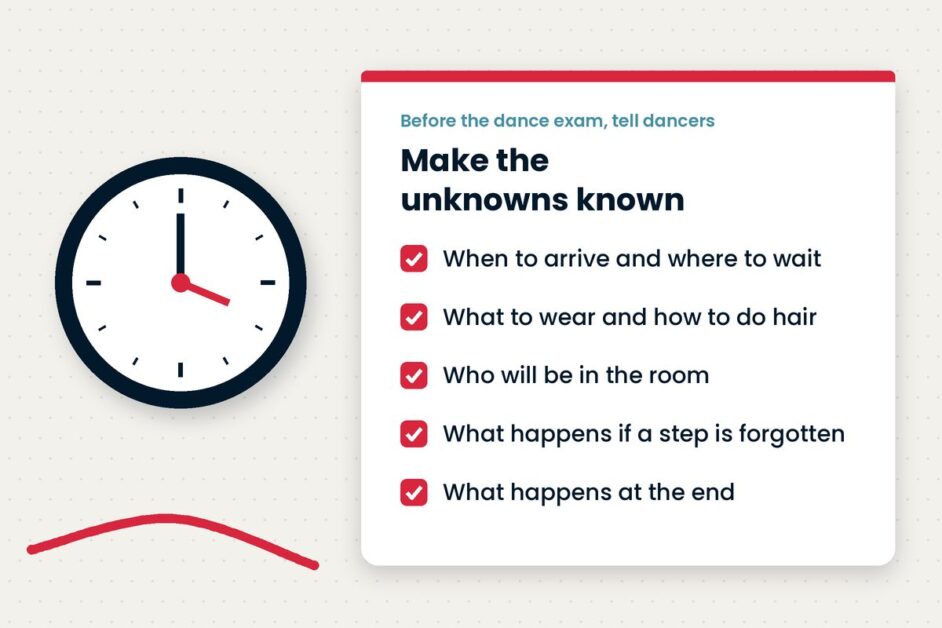
Many worries come from not knowing what will happen. Talk students through the day in simple steps:
- what time they need to arrive and where they will wait
- what to wear and how their hair should look
- who will be in the room
- what happens if they forget a step
- what happens when they finish.
If you enter students with an exam board, check that board’s own syllabus and rules so the details you share are accurate. If the exam takes place in a different venue, a short visit or a photo of the room can help too.
Plan preparation in manageable chunks
Being well prepared is the best way to overcome anxiety, says the NHS advice for students on preparing for exams. It recommends a realistic schedule, broken into manageable chunks, with regular short breaks.
For a dance exam, that might mean mapping out the weeks ahead so every exercise gets attention well before the day. Leave the final week for polishing, performance quality and rest, rather than learning anything new. Dancers who feel secure in their work tend to feel calmer about showing it.
Encourage students to keep up their usual classes too. The NHS lists dancing among the kinds of exercise that can boost energy levels and clear the mind during exam periods. For older students sitting school exams, our post on the benefits of dance during GCSE and A level exams explores this further.
Give dancers a calming routine
Simple, repeatable routines help dancers feel in control on the day. The NHS suggests a breathing exercise for anyone feeling overwhelmed before an exam. Breathe in through your nose for 4 counts, hold for 2 counts, and breathe out for 7 counts. For younger children, the NHS page on anxiety in children suggests 3 deep, slow breaths. Breathe in for a count of 3 and out for 3.
Teach the breathing in class, weeks before the exam, so it feels familiar. You could add it to the end of your warm-up or to your cool-down. Dancers can then use it quietly while they wait to go in.
Other small routines help too. Some dancers like a set order for getting ready, or a favourite stretch. Others like a quick reminder phrase from their teacher, such as “long neck, soft shoulders, big smile”. The NHS also notes that children of all ages find routines reassuring.
Kind language makes a big difference
The way we talk about exams shapes how students feel about them. Try to focus on what dancers can already do and the progress they have made. The NHS encourages parents to help children think about what they know and the time they’ve already put in. That can help them feel more confident.
In class, that might sound like “you’ve got this exercise really secure now” or “look how much stronger your balances are than in September”. Praise effort and improvement, not just results.
After the exam, the NHS suggests talking through the parts that went well rather than focusing on the difficult moments, and then moving on. That’s a gentle, positive model for your feedback too.
Working with parents
Parents are a big part of exam preparation, and most want to help. A little guidance from you goes a long way. The NHS notes that Childline hears from many children who feel most of the pressure at exam time comes from their family. A friendly note home helps everyone pull in the same direction.
You could share the practical details of the day and suggest a good night’s sleep and a proper breakfast. Encourage parents to be reassuring and positive too. The NHS says most teenagers need 8 to 10 hours’ sleep a night, and that sleep benefits children far more than last-minute cramming. Our guide to preparing parents for competition day has more ideas that work just as well for exams.
Supporting dancers who need a little more
Some students feel more anxious than others, and a few may need extra help. The NHS explains that anxiety becomes a problem for children when it starts to get in the way of everyday life. For example, it might be very strong, getting worse or stopping them doing things they enjoy.
If you notice a dancer who seems very worried, talk to them kindly and listen. Agree small changes that might help, such as a quieter space to wait or a chance to run their exercises one more time. Speak to their parents if you’re concerned. The NHS suggests a GP is a good place to start if anxiety is severe and persists.
Some students may simply need to wait until they feel ready. An exam should be a positive experience that celebrates progress, so it’s fine to enter a dancer in a later session. Check your exam board’s entry rules when you plan it. Treat their wellbeing as part of your safe, caring practice, just as you would their physical safety.
Celebrate every step
Whatever the result, finishing an exam is an achievement. The NHS encourages families to plan small rewards and celebrate when exams are over. In the studio, that might be a certificate presentation, a photo board or a special class. Celebrating together reminds dancers that exams are one part of a much bigger love of dance. For more on building a positive outlook, read our Teach.Dance post on developing a dance mindset.
Quick FAQ
How far ahead should I run a mock exam?
We’d suggest a few weeks before, as it leaves time to work on anything that comes up. A second, shorter run-through closer to the day can help too.
What can dancers do while they wait to go in?
A quiet breathing exercise they’ve practised in class works well. The NHS suggests breathing in for 4 counts, holding for 2 and breathing out for 7.
What if a student seems very anxious about their exam?
Listen, reassure them and agree small changes that help. Talk to their parents if you’re concerned. The NHS suggests seeing a GP if anxiety is severe, persists and affects everyday life.
What can I send home before the exam?
A short note with the timings, what to wear and a reminder about sleep and breakfast. Follow your exam board’s own rules for the details.
Teach.Dance · For Teachers, By Teachers




Responses