
Government Curriculum Review: A New Era for Dance in Schools?

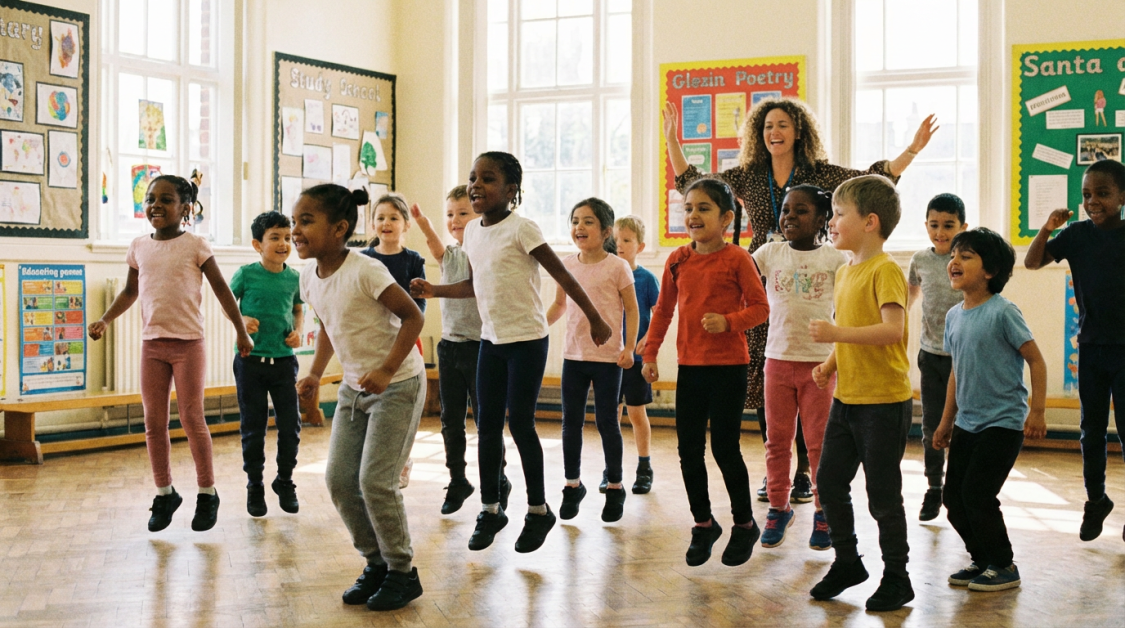
The long-awaited government report on the future of England’s education system has finally landed, and for those of us in the dance education sector, it makes for some very interesting reading. The Curriculum and Assessment Review, led by Professor Becky Francis CBE, has taken a hard look at how subjects are taught from Key Stage 1 through to Key Stage 4.
For years, we have known that dance often sits awkwardly within the curriculum, somewhere between a creative art and a physical activity. It is fantastic to see that the government is finally recognising that dance provision in schools needs more work. We know it is an incredible activity for young people to get involved in because it helps them develop a massive range of key skills, from physical coordination to emotional resilience.
If you are a primary school teacher struggling to fit dance into your PE schedule, or a dance school owner looking to grow your student base, this review offers a roadmap for what is coming next. Let’s unpack the key findings and what they actually mean for you.
The Current State of Dance in Schools
One of the most validating parts of the Building a world-class curriculum for all report is its honesty about the current state of play. The review acknowledges that while Dance is technically a statutory part of the PE curriculum from Key Stages 1 to 4, the reality on the ground is very different.
The report highlights that dance is often not taught to all pupils, or when it is, it is not always well organised. This is not about blaming teachers. The review explicitly points out a lack of confidence among generalist staff. It notes that a quarter of primary teachers do not feel confident teaching simple dances at Key Stage 1, and that number jumps to over a third by Key Stage 2.
This lack of confidence stems from a curriculum that has been historically vague. The current PE Programmes of Study lack the detail needed to help non-specialist teachers understand what good progress looks like in dance. When the curriculum says “perform dances,” it leaves a lot of room for interpretation, and without specialist training, many teachers naturally gravitate towards traditional sports where they feel more comfortable.
Key Recommendations for Primary Dance
The review proposes some significant changes that could reshape how dance is delivered in primary settings. The headline recommendation is that the government must review how the PE Programmes of Study refer to dance.
The goal is to add specificity. The review argues that we need clear expectations to support high-quality teaching. This does not mean simply adding more volume to an already crowded curriculum. Instead, it is about clarifying what pupils should actually know and be able to do. The focus will likely remain on movement, but there is a recommendation to consider other essential aspects like choreography and appreciation, which are currently absent or under-represented in the PE documentation.
This shift aligns with what organisations like the Cultural Learning Alliance have advocated for over many years. They have consistently highlighted that dance is not just about getting a heart rate up. It is a vital form of cultural expression and creativity. By tightening up the curriculum requirements, schools will be encouraged to treat dance with the same rigour as mathematics or literacy.
Changes on the Horizon for Secondary and GCSE Dance
The review also tackles the drop-off in dance participation as students get older. Take-up for GCSE Dance is incredibly low, sitting at just 1% in 2024/25. The report suggests that part of the problem is a disconnect between the curriculum at Key Stage 3 and the demands of the GCSE. Because students often don’t get a solid grounding in dance during their earlier years, the leap to GCSE level feels impossible without private tuition outside of school.
Furthermore, there is a recommendation to review the GCSE Dance content itself. Feedback gathered during the review suggests the current qualification is too heavy on theory and written assessment, which does not reflect the practical, creative nature of the discipline. The Royal Ballet & Opera has responded to the review by emphasising the need for arts subjects to be central to school life, ensuring that assessment methods actually suit the art form.
What This Means for Dance School Owners
You might be wondering how a government review of state education affects your private dance business. The answer is that this can only be a positive thing.
When dance is delivered well in schools, more young people catch the “dance bug.” A structured, high-quality offering within primary education for example, acts as a spark. It introduces children to the joy of movement who might never have walked past your studio doors otherwise. When children enjoy dance at school, they inevitably want to do more of it. They want to take exams, wear the uniform, and be part of a show. That is where you come in.
This review presents a golden opportunity to build bridges. As always, partnerships with your local schools are a great way to help attract new students to your school. With the government highlighting a lack of teacher confidence, you are perfectly positioned to offer the solution. Primary schools will be looking for expertise to help them meet these new, more specific curriculum requirements.
At Teach.Dance, we strongly believe in the importance of introducing dance at a young age. We support this through our Mini Movers dance offering, which is designed specifically to engage early years and Key Stage 1 children. For those looking to support schools directly or schools looking to offer dance themselves, our Primary Dance package is tailored to help teachers deliver quality dance that meets current curriculum requirements, bridging that confidence gap the report identified.
Timeline for Implementation
Education reform is rarely a sprint, and this is no exception. The publication of this report marks the start of the next phase, not the finish line.
The government is expected to issue a formal response to the review shortly. Following that, the actual work of redrafting the Programmes of Study will take place from late 2025 onwards. There will be a statutory consultation process in 2026 where the draft content will be tested with stakeholders.
This means we likely won’t see the new curriculum in classrooms immediately, but schools will begin preparing for these shifts much sooner.
Preparing for the Future
Whether you are a school teacher looking to upskill or a dance specialist running your own business, the direction of travel is clear. Dance is being recognised as a distinct, valuable discipline that requires specific knowledge to teach well.
For school teachers, now is the time to seek out resources that demystify the creative process of dance. You do not need to be a professional dancer to teach a great dance lesson; you just need a clear framework and good ideas.
For dance business owners, look at your local schools not as competition, but as partners. If you can help a local school deliver their curriculum obligations—perhaps by running an after-school club or offering CPD sessions for their staff, you become an invaluable part of the local education ecosystem.
The Curriculum and Assessment Review is a step toward a system where dance is not just an optional extra, but a core part of a child’s creative and physical development. That is a vision we can all get behind.





Responses