
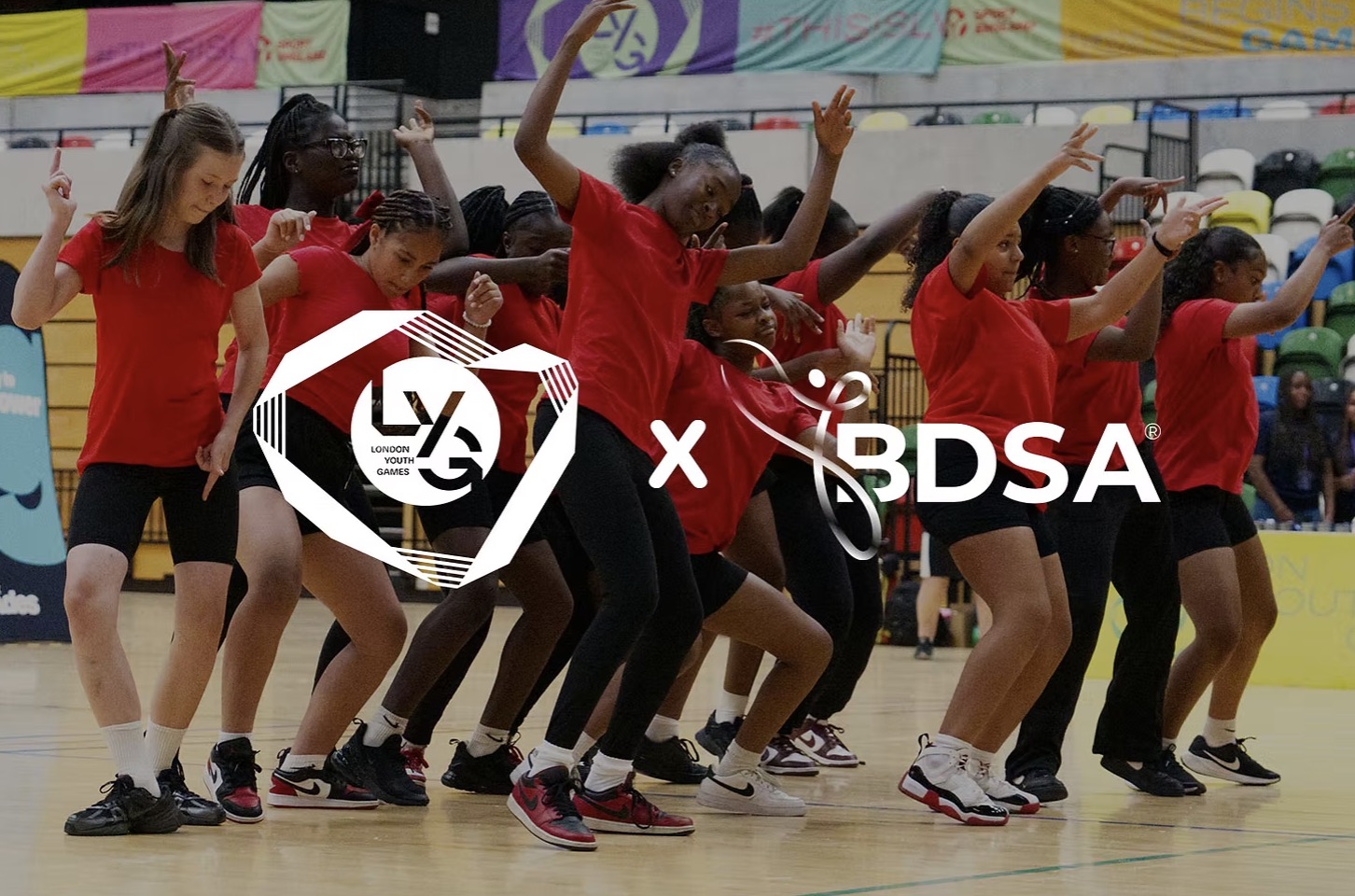
If you’ve ever watched a group of seven-year-olds absolutely lose themselves in a movement routine — all that unfiltered energy, the total commitment to every count of 8 ,you’ll know there’s something special about dance at that age. And now there’s a proper competitive platform for it.
The British DanceSport Association (BDSA) and the London Youth Games (LYG) have announced a new pilot dance competition specifically for primary schools, launching across three London boroughs. It’s a significant expansion of the existing LYG Dance Competition, which has been running for years at secondary level across the U14, U16, U18 and Para categories. For the first time, primary-age children will have a route into the same programme, with borough winners getting the chance to perform at the LYG Dance Finals in July.
Let’s be honest: performance opportunities for younger dancers that aren’t tied to a specific syllabus or exam board can be hard to come by. This fills a real gap. The format is movement to music, which keeps it open and accessible — no requirement for a particular dance style, no entry fees tied to a specific organisation. Just get a routine together and go.
What this actually means for us
For those of us teaching primary-age children, whether that’s in a Saturday school, as part of a school’s PE programme, or through after-school clubs, this is worth paying attention to. It’s a structured, borough-level competition with a clear pathway to a London-wide finals event. That’s the kind of thing that gives our younger students a genuine goal to work towards, and gives us something concrete to build a term’s work around.
It also matters for anyone who’s been banging the drum about dance in primary education. The London Youth Games is a well-established name, over two million young Londoners have taken part across their 49-year history, and alumni include the likes of Dina Asher-Smith and Sir Mo Farah. Having dance formally included at primary level within that framework sends a message about where dance sits alongside other physical activities. It’s not an afterthought. It belongs there.
“We recognise that dance can offer more than just physical movement opportunities for children, that movement to music in a welcoming community and competitive environment encourages self-awareness, social skills, confidence and a sense of pride and achievement.”
— Karen Hilton MBE, Vice President, BDSA
We all know this already, of course. But it’s good to hear it coming from the governing body, backed by action and funding rather than just warm words.
The pilot is launching in three London boroughs initially, with a view to expanding if it goes well. If we’re in one of those boroughs, or if we work with schools that are, it’s worth getting in touch with the LYG team sooner rather than later to find out how to register.
Even for those of us outside London, this is one to watch. If the pilot succeeds, it could set a model for primary-age dance competitions linked to established sports programmes elsewhere in the country. And frankly, anything that gives our youngest dancers a stage and a sense of achievement beyond the end-of-term show is a good thing.
The practical bit: Head to londonyouthgames.org to find out which boroughs are included and how to get involved. The Finals are in July, now’s the time to start planning those routines.







Responses